

The IOPC’s reinvestigation of the disappearance of the tapes
- Investigators re-examined the documents and evidence gathered as part of the original investigation, establishing what steps SYP had taken before it passed responsibility for the investigation to WMP. They then looked at the WMP investigation, as well as reviewing statements made to different inquiries by key witnesses such as the technical consultant. It was not possible to conduct any forensic examination at this stage. However, the IOPC did take new witness statements from some of those who had been involved in the original investigation into the disappearance of the tapes.
- The available evidence did not enable the IOPC to find the tapes, or to shed any further light on who removed them.
- The review of all previous materials showed a lot of agreement about the core facts among four main witnesses—the technical consultant, his recently appointed successor who was in the control room as an observer, a police officer who typically worked in the SWFC control room on match days and SWFC’s head of security.
- The technical consultant had revamped SWFC’s CCTV system a couple of years previously. It involved a network of cameras positioned around the ground. Each camera was connected to a dedicated monitor in the control room, which was located in the South Stand, in an area of the stadium to which the public did not normally have access.
- There was a video recorder (sometimes referred to as a video cassette recorder, or VCR), linked to each of the monitors, which recorded the camera’s output on match days. These were standard video recorders, placed on shelves in a cupboard in the control room. Both the cupboard and the room itself were lockable, using separate keys. There were further keys to operate the alarm system for the room and to turn the computer and CCTV system on.
Image
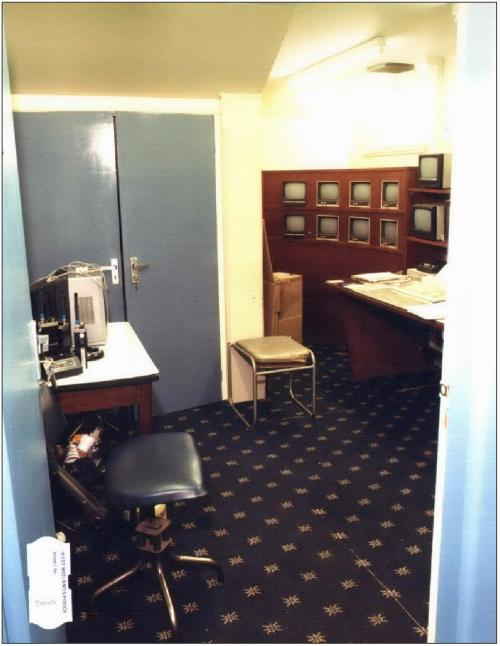
Figure 18A: Screens and lockable cupboard in the SWFC control room (Source: WMP)
Image
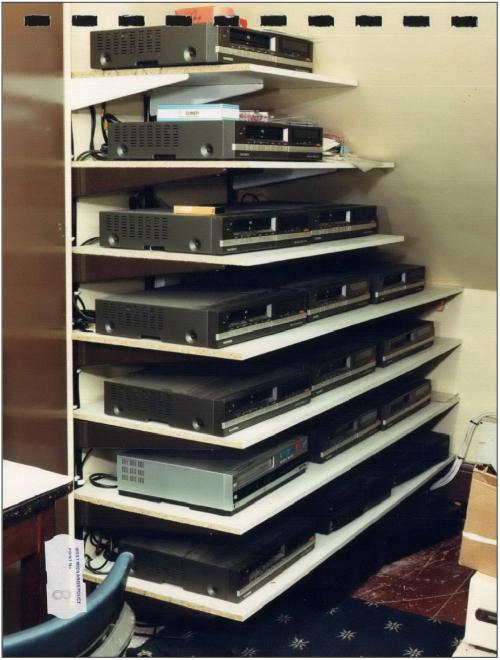
Figure 18B: Video recorders inside the lockable cupboard (Source: WMP)
- The technical consultant and police officer both recalled that the tapes had started recording as normal on 15 April, sometime between 12.30 and 1pm.
- There was agreement that someone was in the room from the time the tapes started recording until 6pm.
- By the time the tapes stopped recording late in the afternoon, the stadium was empty. In what he highlighted as a change from normal practice, the technical consultant ejected the tapes from the video recorders but left them resting in the carriages of the video recorders (that is, half in, half out). He has given two different explanations for this. In a statement he gave to SWFC’s solicitors, he stated he did this “so that I could later know exactly which tape related to which monitor/area.” At the Goldring Inquests, he suggested that ejecting them made sure they could not be inadvertently recorded over.
- While no one in the room has stated categorically that all the tapes were there at this point, no one has indicated that any were missing.
- There are some differences in accounts of what happened after 6pm, when the police officer and successor to the technical consultant both left. The technical consultant has stated he turned the alarm on and locked up but then had to return to the room to produce some printouts from a computer. The head of security has also said that he went into the room to retrieve his coat—though in a different account, suggested he picked up his coat from elsewhere. This all happened before 7.30pm.
- Both had their own set of keys to the room. Neither specifically stated that they locked everything up again.
- The technical consultant has consistently stated that he discovered the tapes were missing when he returned to the ground at around 9am the following morning. He has stated that the control room door was locked when he arrived, but the door to the video recorder cupboard was ajar and two of the recorders did not have tapes in them. At some points, he has stated the alarm was working when he arrived but in his most recent account, a statement to Operation Resolve, he said the alarm was not set.
- After discovering the tapes were missing, the technical consultant has consistently stated that he first searched the room for the two missing tapes, then reported the loss to Mr Mackrell. In some accounts, he has said he also informed the SWFC Chairman, Herbert McGee, at the same time.
- Though the technical consultant discovered the tapes were missing on the morning of Sunday 16 April 1989, SWFC did not immediately report their disappearance to SYP.